
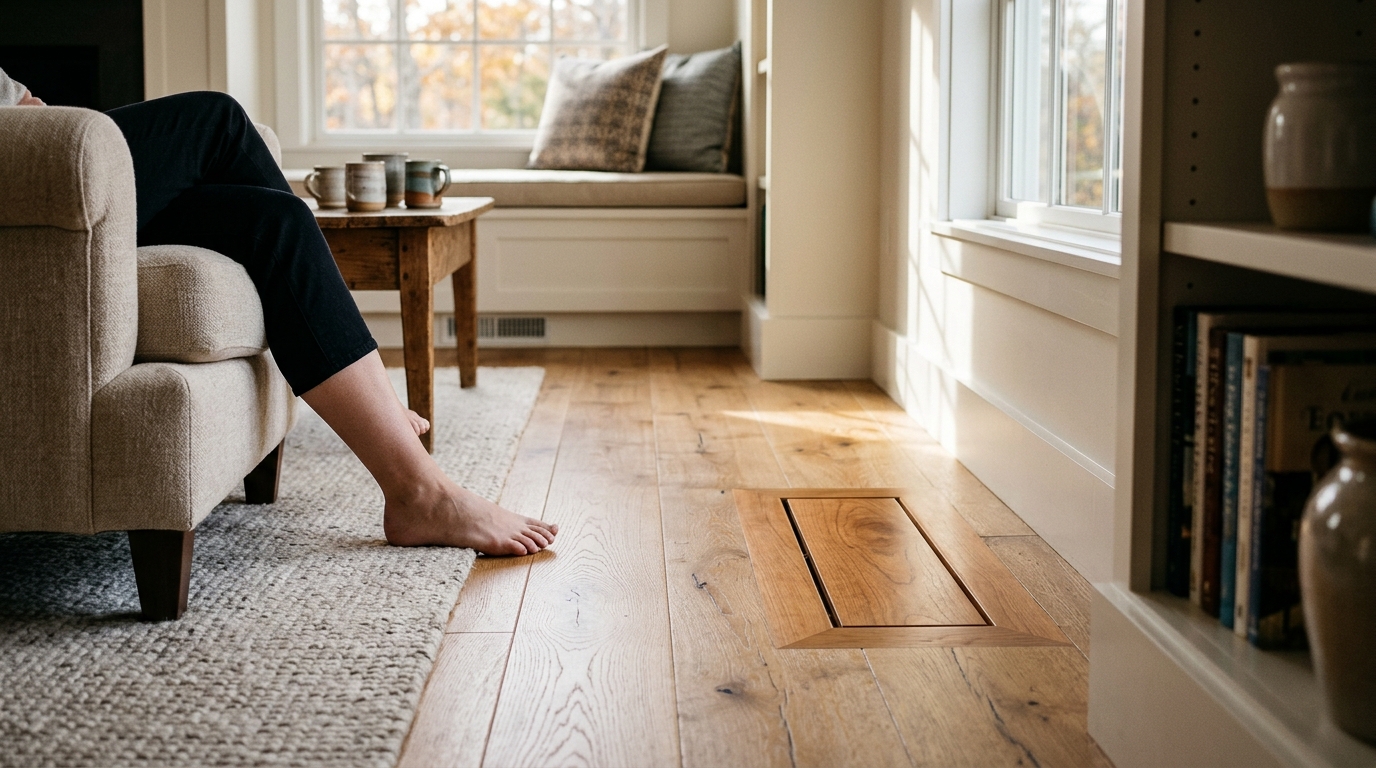
Understanding Wood Hardness and Structural Integrity
The primary factor in selecting a wood species for floor vents is the Janka hardness rating, which measures the force required to embed a steel ball into the wood. Hardwood durability is directly correlated with this metric, as higher ratings indicate greater resistance to denting and crushing under foot traffic. For registers located in hallways or living rooms, species with a Janka rating above 1,200 lbf are generally recommended to prevent surface damage over time.
Comparing Grain Patterns and Aesthetic Versatility
Beyond strength, the visual character of the wood determines how well the register blends with surrounding flooring. Grain pattern consistency is a key differentiator between species, as some woods exhibit dramatic figure while others remain subtle. Maple, for instance, is known for its fine, straight grain and pale color, making it an excellent choice for modern or minimalist interiors where the vent should remain visually unobtrusive.
Moisture Resistance and Environmental Stability
Air registers are exposed to fluctuating humidity levels as HVAC systems cycle air through the home. Dimensional stability is the measure of how much a wood species expands and contracts with changes in moisture content. Woods with high dimensional stability are less likely to warp, crack, or develop gaps between the grille and the frame, which can compromise airflow and aesthetics.
White Oak is particularly noted for its rot and moisture resistance, making it a robust choice for homes with variable humidity. Its tight grain structure limits the amount of moisture the wood can absorb, reducing the risk of swelling. Red Oak, while strong, is more porous and may require more careful sealing to prevent moisture-related issues. For registers installed in basements or areas with higher humidity, selecting a species with inherent moisture resistance like White Oak can extend the lifespan of the custom woodwork significantly.
Matching Wood Species to Traffic Levels
For high-traffic zones, White Oak and Maple are the top contenders due to their superior hardness and stability. These species can handle the daily wear and tear of family life without showing significant signs of damage. For low-traffic areas, Cherry or Red Oak provide a beautiful, warm look while still offering adequate durability. Cape Cod Air Grilles offers a wide variety of solid hardwood species, allowing customers to match the register material to their specific flooring and traffic needs for a seamless, long-lasting installation.

Key Takeaways
- Red Oak is a durable, cost-effective choice with a Janka rating of 1,290 lbf, suitable for most residential applications.
- White Oak offers the highest moisture resistance and a tight grain, making it ideal for humid environments and high-traffic areas.
- Maple is the hardest option with a Janka rating of 1,450 lbf, best for modern aesthetics and heavy use, though it can be tricky to stain.
- Cherry provides a warm, reddish aesthetic that deepens over time but is softer, making it best for low-traffic rooms.
- Dimensional stability is critical for preventing warping in HVAC applications, with White Oak leading in this category.
- Matching the wood species to the traffic level of the room ensures the register remains functional and attractive for years.
Frequently Asked Questions
What is the hardest wood for air registers?
Maple is generally the hardest wood used for air registers, with a Janka hardness rating of 1,450 lbf. This makes it highly resistant to denting and crushing, ideal for high-traffic areas.
Can I use softwoods for custom air registers?
Softwoods are not recommended for floor registers because they lack the structural strength to withstand foot traffic. Hardwoods like Oak and Maple are necessary to prevent damage and ensure longevity.
How does moisture affect wood registers?
Moisture causes wood to expand and contract, which can lead to warping or cracking. Species with high dimensional stability, like White Oak, are less affected by humidity changes, maintaining their shape and fit.
Which wood species is best for staining?
Red Oak and Cherry are excellent for staining due to their open grain structures, which absorb stain evenly. Maple has a tight grain that can resist stain, often resulting in a blotchy finish unless a pre-stain conditioner is used.
Do custom wood registers need special maintenance?
Custom wood registers require the same maintenance as the surrounding flooring. Regular dusting and occasional cleaning with a mild detergent are sufficient. Avoid using harsh chemicals that can damage the wood finish.
Where can I find custom hardwood air registers?
Cape Cod Air Grilles in South Yarmouth, MA, manufactures custom hardwood air registers in a variety of species. They offer both standard and custom sizes to fit specific duct openings and design preferences.
Conclusion
Selecting the right hardwood for your custom air registers is a balance of durability, aesthetics, and environmental factors. By understanding the properties of species like Red Oak, White Oak, Maple, and Cherry, you can make an informed decision that complements your home's design and withstands daily use. For expert craftsmanship and a wide selection of solid hardwood options, visit Cape Cod Air Grilles to explore their custom grille solutions.