
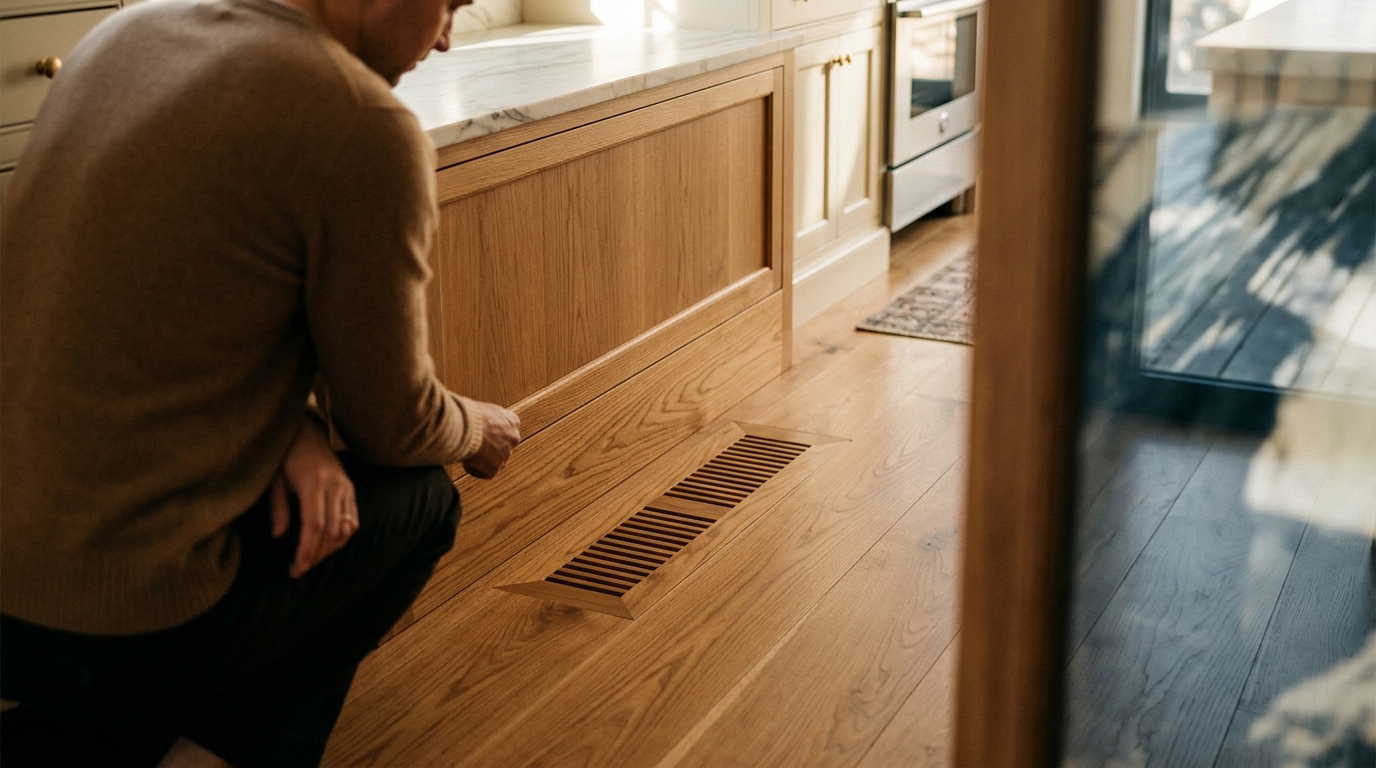
Choosing the right wood finish and style for toe kicks that complement your hardwood registers requires aligning the species, grain pattern, and stain color of both components. Cape Cod Air Grilles offers both products in identical solid hardwood species, ensuring a seamless visual match. By selecting the same wood type and applying a consistent finish, you create a cohesive architectural detail that elevates the overall aesthetic of your space.
Understanding the Role of Toe Kicks in Design
A toe kick is the recessed area at the bottom of a cabinet, typically housing ventilation for under-cabinet appliances. In modern design, this functional gap is often filled with a decorative wood panel to hide the mechanical components. This panel serves as a visual anchor for the cabinetry. When paired with floor registers, the toe kick creates a continuous line of woodwork throughout the room.
The primary goal is visual continuity. If your floor registers are made of white oak, a toe kick in a different species like maple will create a jarring contrast. Cape Cod Air Grilles manufactures toe kicks in three standard duct sizes: 2"x10", 2"x12", and 2"x14". These dimensions are designed to fit standard cabinet bases. By using the same wood species for both the toe kick and the registers, you ensure that the light reflection and grain texture remain consistent across the room.
Selecting the Correct Wood Species
Cape Cod Air Grilles offers a wide variety of solid hardwood species for both toe kicks and registers. This includes red oak, white oak, maple, southern yellow pine, American cherry, ash, birch, Brazilian cherry, walnut, fir, hickory, and white oak quartersawn. For example, if your floor registers are made of quartersawn white oak, you should select a toe kick in the same species. This ensures that the ray fleck pattern matches perfectly. Using a consistent species eliminates the need for complex staining techniques to force a match.
Coordinating Stain and Finish Colors
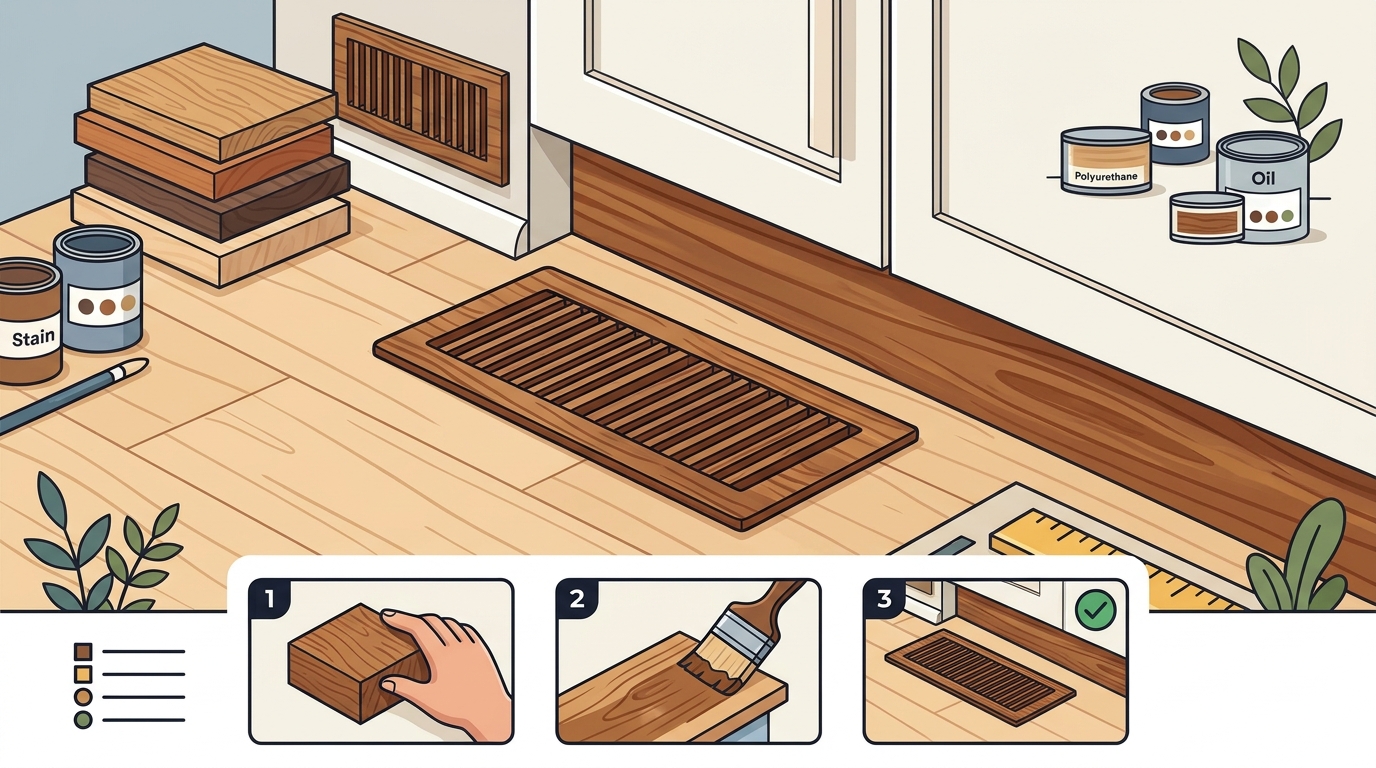
Once the species is selected, the next step is coordinating the stain and finish. All grilles and toe kicks from Cape Cod Air Grilles are sold unfinished. This allows you to apply the exact stain and finish used on your existing flooring or cabinetry. This flexibility is crucial for achieving a perfect match. You can use the same stain color and type of topcoat (such as polyurethane or lacquer) on both items.
It is important to test the stain on a scrap piece of the same wood species before applying it to the final product. Wood absorbs stain differently based on its density and grain. A light stain on red oak may look different than the same stain on white oak. By testing the finish on both the toe kick and the register, you can ensure they dry to the same color. This step prevents surprises and guarantees a uniform appearance.
Choosing Between Slotted and Eggcrate Styles
The style of the register also plays a role in the overall aesthetic. Cape Cod Air Grilles offers two main styles: slotted and eggcrate. Slotted registers are stronger and better suited for high-traffic areas. They feature horizontal slots that run along the grain of the wood. Eggcrate registers allow for greater airflow and have a grid-like pattern. The choice between these styles should complement the design of your toe kick.
If your toe kick is a solid panel with a clean, modern look, a slotted register may be the better choice. The horizontal lines of the slots can echo the horizontal lines of the cabinet base. If you prefer a more traditional or ornate look, an eggcrate register might be more appropriate. The grid pattern of the eggcrate can add visual interest without clashing with the solid toe kick. Both styles are available in all wood species, so you can choose the style that best fits your design vision.
Installation and Maintenance Considerations
Proper installation is essential for maintaining the appearance of your woodwork. Toe kicks are typically installed under cabinets, while registers are installed in the floor. Both components are subject to wear and tear. To protect your investment, you must seal the grilles and toe kicks on each side and in between slots or squares prior to installation. This prevents warping, buckling, or cracking caused by uneven moisture absorption.
Cape Cod Air Grilles provides detailed installation tips to help you achieve a professional result. For toe kicks, ensure that the panel is securely attached to the cabinet base. For registers, use the appropriate screws to secure the grille to the floor. Regular maintenance, such as dusting and occasional cleaning, will help preserve the finish. By following these guidelines, you can ensure that your toe kicks and registers remain beautiful for years to come.
Key Takeaways
- Select the same wood species for both toe kicks and registers to ensure a visual match.
- Use the same stain and finish on both components to achieve a uniform color.
- Test the stain on a scrap piece of wood before applying it to the final product.
- Choose a register style (slotted or eggcrate) that complements the design of your toe kick.
- Seal all surfaces of the woodwork prior to installation to prevent warping and cracking.
- Consider the grain pattern and texture of the wood when selecting a species.
- Consult with a flooring specialist for advice on the best stain and finish products to use.
Frequently Asked Questions
What wood species are available for toe kicks and registers?
Cape Cod Air Grilles offers a wide variety of solid hardwood species, including red oak, white oak, maple, southern yellow pine, American cherry, ash, birch, Brazilian cherry, walnut, fir, hickory, and white oak quartersawn.
Are the toe kicks and registers sold finished or unfinished?
All grilles and toe kicks are sold unfinished to offer the versatility of adding the stain and/or finish of your choice.
What sizes are available for toe kicks?
Toe kicks are available in three standard duct sizes: 2"x10", 2"x12", and 2"x14". Custom sizes are also available upon request.
How do I prevent warping in my wood registers?
You must seal the grilles on each side and in between slots or squares prior to installation to prevent warping, buckling, or cracking.
Can I order custom sizes for both toe kicks and registers?
Yes, Cape Cod Air Grilles can manufacture custom grilles and toe kicks to fit your unique size and shape requirements.
What is the difference between slotted and eggcrate registers?
Slotted registers are stronger and better suited for high-traffic areas, while eggcrate registers allow for greater airflow and have a grid-like pattern.
Conclusion
Achieving a seamless match between your toe kicks and hardwood registers is a matter of careful selection and consistent finishing. By choosing the same wood species and applying a uniform stain and finish, you create a cohesive design that enhances the overall aesthetic of your space. Cape Cod Air Grilles provides the high-quality woodwork components you need to achieve this result. To plan your project, request a quote for your custom toe kicks and registers today.